When it comes to trademarks and copyrights, understanding which one you need is crucial in protecting your intellectual property. This article delves into the differences between trademarks and copyrights, shedding light on their purposes and benefits. Stay tuned for an enlightening exploration of Trademark vs Copyright: Which One Do You Need?
Exploring the realm of intellectual property rights can be a complex yet rewarding journey. Let's navigate through the nuances of trademarks and copyrights to help you make informed decisions for safeguarding your creations.
Trademark Basics
A trademark is a unique symbol, word, or phrase used to identify and distinguish a company's products or services from others in the market. It helps consumers recognize and trust a particular brand, making it a valuable asset for businesses.
Examples of Well-Known Trademarks
- Apple's bitten apple logo
- Nike's "swoosh" symbol
- Coca-Cola's distinct red and white logo
Trademark Symbols
Trademarks are typically denoted by the symbols ™ for unregistered marks and ® for registered trademarks. The use of these symbols helps indicate the status of the trademark and prevent unauthorized use by others.
Registering a Trademark
The process of registering a trademark involves submitting an application to the appropriate government agency, such as the United States Patent and Trademark Office (USPTO). This application includes the details of the mark, its intended use, and the class of goods or services it will represent.
Once approved, the trademark is protected, giving the owner exclusive rights to its use in the marketplace.
Copyright Fundamentals
Copyright is a form of intellectual property protection that gives creators the exclusive right to use and distribute their original works. This protection applies to a wide range of creative works, from literary and artistic works to software and architectural designs.
Copyright is essential for creators to control how their works are used and to prevent others from copying or distributing them without permission.
Difference Between Copyright and Trademark
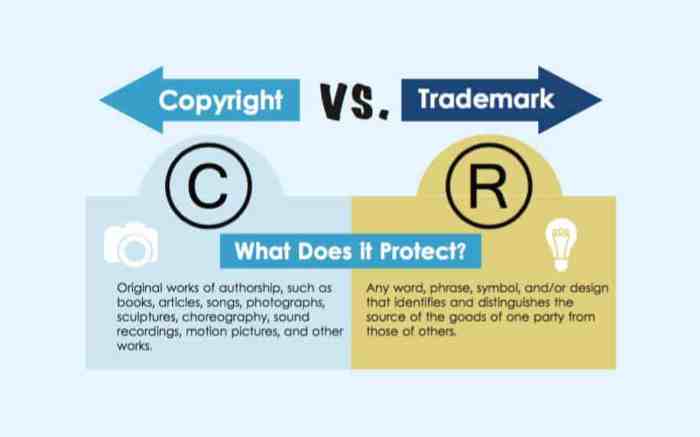
Copyright and trademark are both forms of intellectual property protection, but they serve different purposes. Copyright protects original works of authorship, such as books, music, and movies, while trademarks protect words, phrases, symbols, and designs that identify and distinguish goods and services.
Copyright protects the expression of ideas, while trademarks protect brand names and logos.
Types of Works Protected by Copyright
- Literary works: books, articles, and computer programs
- Artistic works: paintings, sculptures, photographs, and architecture
- Musical works: songs, compositions, and sound recordings
- Dramatic works: plays, scripts, and choreography
- Audiovisual works: movies, TV shows, and online videos
- Derivative works: adaptations, translations, and compilations
Duration of Copyright Protection
Copyright protection typically lasts for the life of the author plus an additional 70 years. For works created by multiple authors or works made for hire, copyright protection lasts for 95 years from the publication date or 120 years from the creation date, whichever is shorter.
Trademark vs. Copyright Protection
When comparing trademark and copyright protection, it's important to understand the scope of each and how they can work together to safeguard intellectual property. Trademarks primarily protect brand names, logos, and slogans that distinguish goods and services in the marketplace, while copyrights protect original works of authorship such as literary, artistic, and musical creations.
Scope of Protection
Trademarks provide protection for brand elements that identify the source of goods or services, preventing others from using similar marks that could cause confusion among consumers. Copyrights, on the other hand, protect the expression of ideas in creative works, giving the creator exclusive rights to reproduce, distribute, and display their work.
- Trademarks safeguard brand identity and reputation in the market.
- Copyrights protect the specific form of expression in creative works.
Benefits of Trademark Protection over Copyright
Trademark protection offers broader protection for brand elements that go beyond the specific expression of a work. This means that trademarks can cover a wider range of assets such as colors, sounds, and even product packaging, providing more comprehensive protection for a company's identity and reputation.
- Trademarks can protect non-traditional elements like sounds and colors.
- Trademark protection can last indefinitely as long as the mark is in use and properly maintained.
Complementing Trademark and Copyright
While trademarks and copyrights serve different purposes, they can complement each other in protecting intellectual property. For example, a company can register a trademark for its brand name and logo while also securing copyright protection for its marketing materials, website content, or software programs.
This dual protection strategy ensures that all aspects of the company's intellectual property are safeguarded.
- Using both trademarks and copyrights can provide comprehensive protection for intellectual property assets.
- Trademark registration can help establish a stronger claim of ownership in copyright infringement cases.
Enforcement and Infringement
When it comes to protecting intellectual property rights, enforcement and addressing infringement are crucial aspects. Let's dive into the legal actions available for trademark infringement and the consequences of copyright infringement.
Trademark Infringement
Trademark infringement occurs when a party uses a mark that is identical or similar to a registered trademark in a way that is likely to cause confusion among consumers. Legal actions available for trademark infringement include:
- Cease and Desist Letters:Often the first step in addressing trademark infringement, these letters demand that the infringing party stop using the mark.
- Lawsuits:If the cease and desist letter is ignored, the trademark owner can file a lawsuit seeking damages, injunctive relief, and possibly the destruction of infringing goods.
- Trademark Trial and Appeal Board (TTAB) Proceedings:Administrative proceedings where trademark owners can challenge infringing marks or defend against challenges.
Copyright Infringement
Copyright infringement involves the unauthorized use of copyrighted material, such as reproducing, distributing, or performing the work without permission. Consequences of copyright infringement may include:
- Cease and Desist Letters:Similar to trademark infringement, copyright holders may send cease and desist letters demanding the infringing party stop using the copyrighted material.
- Lawsuits:Copyright holders can file lawsuits seeking damages, injunctions, and potentially statutory damages for willful infringement.
- DMCA Takedown Notices:In cases of online copyright infringement, copyright holders can issue Digital Millennium Copyright Act (DMCA) takedown notices to internet service providers to remove infringing content.
Famous Cases
One famous trademark infringement case is Apple Inc. vs. Microsoft Corporation over the use of the "Windows" mark. In the copyright realm, the landmark case of Harper & Row Publishers, Inc. v.
Nation Enterprises involved the unauthorized publication of excerpts from former President Gerald Ford's memoir.
Role of Intellectual Property Lawyers
Intellectual property lawyers play a crucial role in enforcing trademark and copyright laws. They assist clients in protecting their intellectual property rights by providing legal advice, sending cease and desist letters, negotiating settlements, and representing clients in litigation proceedings. These legal professionals help navigate the complex landscape of intellectual property enforcement and ensure that rights are upheld and respected.
Final Thoughts
In conclusion, grasping the distinctions between trademarks and copyrights empowers you to make informed choices in safeguarding your intellectual property. Remember, whether it's the exclusive rights of a trademark or the creative protections of a copyright, understanding your needs is the first step towards securing what's rightfully yours.
Expert Answers
What is the main difference between a trademark and a copyright?
Trademarks protect logos, slogans, and brand names used in commerce, while copyrights safeguard original creative works like books, music, and art.
How long does trademark protection last compared to copyright protection?
Trademark protection can last indefinitely as long as the trademark is being used, while copyright protection typically lasts for the author's life plus 70 years.
Can one work be protected by both trademark and copyright?
Yes, a single work like a logo can be protected by both trademark (for its use in commerce) and copyright (for its artistic expression).




![Average Corporate Lawyer Salary [2024] | Things to Know | Finbold](https://legal.gamevibes.life/wp-content/uploads/2026/05/Screenshot-2023-12-18-at-13.48.56-1024x630-1-120x86.jpg)